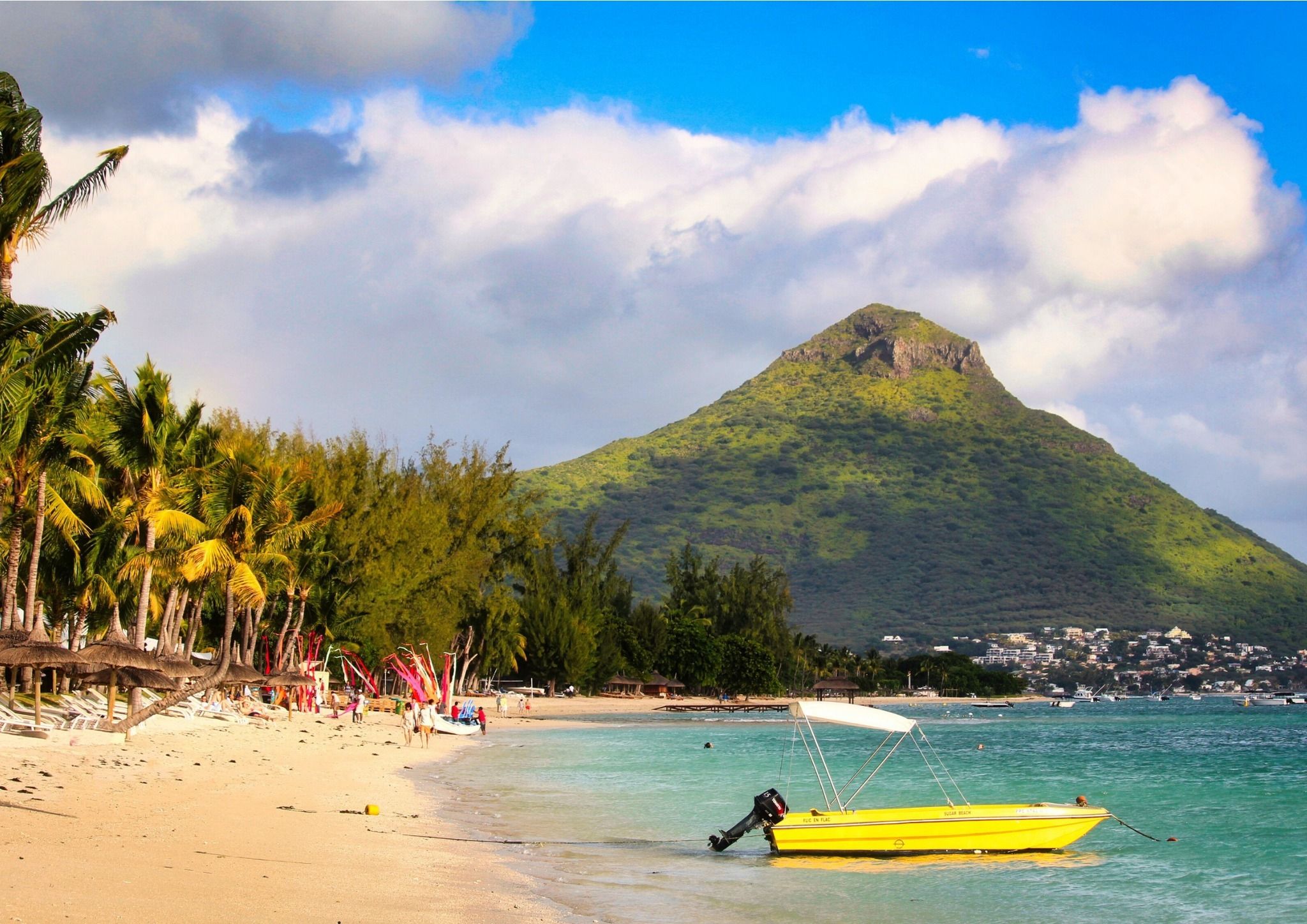
The Decade of Certainty: Why Solo Entrepreneurs are Moving to Mauritius
The era of hopping between 90-day tourist visas is over. A growing wave of solo entrepreneurs, consultants, and service providers are making a fundamentally different calculation — one built around long-term legal certainty rather than perpetual motion. Mauritius sits at the center of that calculation.
Obtaining a self employed visa in Mauritius isn't a lifestyle experiment. It's a strategic business decision. The Self-Employed Occupation Permit is issued for a period of 10 years — a tenure that dwarfs the short-term arrangements most entrepreneurs settle for elsewhere, and one that fundamentally changes how you can plan, invest, and grow.
The 10-year OP transforms residency from a logistical headache into a genuine competitive asset for independent professionals.
That stability unlocks something beyond legal status. Positioned between the African continent and the Indian Ocean economies, Mauritius offers entrepreneurs a credible gateway market — a jurisdiction where banking relationships, client contracts, and long-range business infrastructure can actually take root.
This isn't about escaping your home country. It's about building a decade-long platform in a pro-business environment where stability meets genuine economic momentum — and the numbers behind that momentum tell a compelling story.
The Economic Case: A 63% Surge in Millionaire Migration
Choosing where to base your business for a decade isn't just a lifestyle decision — it's a financial one. Before examining why the Self-Employed Occupation Permit is widely considered the best self employed visa in Mauritius, it's worth understanding the economic foundation you'd be building on.
Wealth Growth: Africa's Most Concentrated HNWI Hub
The numbers are striking. Mauritius recorded a 63% increase in the number of millionaires between 2015 and 2023, according to the Henley & Partners 2025 Africa Wealth Report. That's not a coincidence — it's the result of deliberate policy, political stability, and a tax environment that rewards capital accumulation.
A growing concentration of high-net-worth individuals in a small island economy creates a networking density that most global cities simply can't replicate.
For solo consultants and service providers, this matters beyond abstract economics. A dense professional ecosystem means:
- Higher probability of meeting investors and founders in everyday environments
- Faster access to decision-makers and potential clients
- Strong informal networking through co-working spaces, cafés, and social clubs
- Increased deal flow in a geographically compact market
Sector Momentum: Services and ICT Lead the Way
The broader economy reinforces this opportunity. Mauritius grew at 4.9% in 2023, with the services sector — particularly ICT and financial services — acting as the primary engine, according to World Bank and African Development Bank data.
Key insight:
Mauritius’s economy is increasingly driven by services and ICT, making it a natural hub for digital-first entrepreneurs and independent professionals.
In practical terms, this means:
- Rising demand for consulting and advisory services
- Expanding digital and tech outsourcing market
- Strong alignment with remote-first business models
- Structural demand for high-skill independent professionals
The ecosystem is not passive — it actively attracts location-independent talent.
The Financial Blueprint: Requirements for the Self-Employed OP
If the economic argument has convinced you to look deeper, the next question is practical: what does it actually take to qualify?
The Occupation Permit for self-employed professionals is accessible, but it requires clear financial commitment.
Core Financial Requirements
- Initial capital requirement: USD 35,000 (approximately MUR 1,500,000)
- Must be deposited into a local Mauritian business bank account
- Acts as working capital for your business (not a fee)
- Business registration:
- Mandatory registration of a company in Mauritius under your name
- Annual turnover requirement:
- MUR 600,000 minimum annual business income for renewal
- Preferred sectors:
- ICT
- Consulting
- Professional services
Sector Advantage Overview
- ICT, consulting, and service-based entrepreneurs receive priority processing
- Authorities favor knowledge-economy contributors
- Lower infrastructure pressure compared to physical industries
- Faster and smoother approval pathways in practice
From Application to the Pink Card
The application process runs through the Economic Development Board (EDB) online portal.
Typical process flow:
- Submit application with business plan and documentation
- Provide proof of funds and professional credentials
- Undergo verification by authorities
- Receive Occupation Permit (“pink card”) within 30–60 days (typical range)
- Gain legal right to live and work in Mauritius for 10 years
The 20-Year Roadmap: From Permit to Permanent Residency
The 10-year Occupation Permit is not the final stage — it is the foundation of a longer-term residency pathway.
Long-Term Residency Timeline
- Years 1–5:
- Operate under Occupation Permit
- Build consistent business income
- Establish local economic presence
- Year 5:
- Eligible to apply for Permanent Residency
- Requires consistent income threshold compliance
- Years 6–10:
- Continue operating while PR application is processed or extended
- Year 10+:
- Eligible for 20-year Permanent Residency status
Permanent Residency Income Requirement
To qualify for PR:
- Minimum annual income requirement:
- MUR 3 million (approximately USD 66,000) per year
- Must be demonstrated over 5 consecutive years
Strategic Benefits of PR
- Long-term residency stability (20 years)
- Residency rights for spouse and dependents
- Ability to make long-term property and education decisions
- Reduced dependency on renewal cycles
Key Insight
Unlike many global visa programs with shifting thresholds and policy uncertainty, Mauritius offers:
- Clear rules
- Stable criteria
- Predictable long-term outcomes
Strategic Advantages: Tax, Lifestyle, and Time Zones
Tax Efficiency
- Flat income tax rate: 15% (personal and corporate)
- No capital gains tax
- No inheritance tax
This structure supports:
- Wealth preservation
- Intergenerational planning
- Lower effective global tax exposure (if residency conditions are met)
Global Connectivity: GMT+4 Advantage
Mauritius operates in GMT+4, offering:
- Overlap with Asian working hours in the morning
- Alignment with European business hours in the afternoon
- Manageable scheduling across global clients
Benefits include:
- Same-day business coverage across Europe–Asia corridor
- Efficient client communication cycles
- Reduced time-zone fatigue compared to Americas-based operations
Infrastructure, Health, and Education
- Private hospitals with international standards
- Expanding network of international schools
- Reliable broadband infrastructure in urban areas
Practical consideration:
- Rural connectivity may be less consistent than urban zones
Conclusion: Securing Your Decade in the Sun
In a world defined by volatility in tax systems, political environments, and work location flexibility, the Mauritius Occupation Permit for self-employed professionals offers rare long-term certainty.
Key advantages include:
- 10-year legal residency stability
- Flat and predictable tax regime
- Clear pathway to permanent residency
- Strong positioning for global remote professionals
Mauritius is also actively developing its SME and entrepreneurial ecosystem, meaning early entrants benefit from a growing infrastructure rather than a saturated one.
Your Next Steps
- Confirm your profession qualifies under self-employed categories
- Ensure consistent income history or projected revenue
- Prepare documentation (passport, business plan, credentials, proof of funds)
- Engage licensed relocation support if needed
- Submit application via the EDB portal
- Plan for a 30–60 day processing window